Showing posts with label Smart Eco Ideas. Show all posts
Wednesday, October 19, 2016
Tuesday, March 8, 2016
Wednesday, October 7, 2015
Tuesday, September 29, 2015
Dismaland for Calais
Reuse: all the timber and fixtures from Dismaland are being sent to the ‘jungle’ refugee camp near Calais to build shelters.
Dismaland was a temporary art project organised by street artist Banksy, constructed in the seaside resort town of Weston-super-Mare in Somerset, England. Prepared in secret, the pop-up exhibition at the Tropicana, a disused lido, was "a sinister twist on Disneyland" that opened 36 days only from august to september 2015. Banksy described it as a "family theme park unsuitable for children." More
photo via The Indipendent - Text via Wikipedia.
Friday, September 25, 2015
Wednesday, June 3, 2015
Friday, December 19, 2014
Christmas good energy | Secret Santa
This Christmas I wish
"Larry Dean Stewart 1948 – 2007 was the creator and original Secret Santa. Through his personal example over a twenty year period, he demonstrated and defined the role and mission of Secret Santa.
"Secret Santa's" random acts of kindness over the years had an impact on people throughout the world who either were beneficiaries or who read in media reports his random acts of kindness and giving; especially three months before his death in January 2007 when his personal identity was made public." more
See you next week with Christmas lunch and smart gift wrapping ideas:)
Tuesday, November 18, 2014
Monday, September 15, 2014
Monday, August 25, 2014
Friday, February 21, 2014
H&M Style for Home Interiors - Spring/Summer 2014
Waiting for the new season to come, H&M has published the new themes for its S/S 2014 Home Collection. Themes are Parisian Chic, Botanical Beauty, New Adventures (for kids, that can choose also from Soft Toy), New Styles (for the table) and Basic Collection. You can have a preview here.
ps: from 2011, H&M has more and more been involved in sustainability creating the Conscious Collection (also for Home products) (I found this interview to Catarina Midby, the brand's head of fashion and sustainability communication, very interesting - from Telegraph.co.uk)
Friday, December 13, 2013
Winter Must-Do: Wild Bird Food
Winter is the perfect season for helping wild birds with food. If you have a quiet outdoor space, you can hang or plant a 'little seeds bar'. Surely you can buy wild bird food, but there are hundreds of homemade recipes you can easily find on the web and make on your own. These are 4 between my favs websites talking about bird food:
- 4 ways to Feed Wild Birds from wikiHow
- Winter Bird Food Recipes from Mother Earth News
- Make a speedy bird cake from RSPB
- Make Your Own Pine Cone feeder from Make Your Own Bird Food
You can contribute to Make Your Own Bird Food library: if you have an old family favorite bird food recipe, and you do not see it already listed, read here.
Thursday, October 3, 2013
Things I love - Instagram
01: André Wogenscky, Le mani di Le Corbusier / Le Corbusier's hands (an intimate portrait of my myth, Corbu) | 02: Spring water Sant Antoni - promotion for Cersaie expo by Gamberi | 03: Muji alphabet stamp set| 04: Clarins cotton printed trousse - Feed Project
Thursday, September 12, 2013
Vegan Yard branding by David Arias
Check other beautiful works in his portfolio here.
"Vegan Yarn - like the name suggests - is a specialty yarn made from a variety of natural plant fibres such as: bamboo, soy and cotton. Heidi, the owner and founder of Vegan Yarn, hand-dyes the yarn with love in small batches, often creating limited yarn collections. Her colour dyeing technique is unique in that her inspiration for colours often derives from Japanese anime films. Vegan Yarn needed a way to present the product so that customers could pick up the yarn and really feel it without having unnecessary labels around to cover it. The design also needed to suggest natural and earth-friendly. Hang tags were created to easily appreciate the yarn without any obstructions. Items were printed on recycled paper. "
Tuesday, July 9, 2013
Renzo Piano: Diogene - Vitra’s smallest building but largest product
Diogene is the new design element developed by the Italian architect Renzo Piano and added to the Vitra Campus from June 2013.
Diogene, named after the antique philosopher Diogenes (who is said to have lived in a barrel because he considered worldly luxuries to be superfluous), is a minimalist living unit which functions completely autonomously as a self-contained system and is thus independent of its environment. With a surface area of 2.5 x 3 metres when fully assembled and furnished, it can be loaded onto a lorry and transported anywhere. Whereas Diogene’s exterior corresponds to the image of a simple house, it is in truth a highly complex technical structure, equipped with various installations and technical systems that are necessary to guarantee its self-sufficiency and independence from the local infrastructure: Photovoltaic cells and solar modules, a rainwater tank, a biological toilet, natural ventilation, triple glazing. To optimise the house’s energy, Renzo Piano is working with Matthias Schuler from the renowned company Transsolar, while Maurizio Milan is responsible for static equilibrium.
Diogene is equipped with everything you need for living. The front part serves as a living room: On one side, there is a pull-out sofa; on the other, a folding table under the window. Behind a partition, there are a shower and toilet as well as a kitchen, which has also been reduced to the necessary. The house and furnishings form a single unit. It is constructed from wood with a warm character, which also defines the interior. For the purpose of weather protection, the exterior is coated with aluminium paneling. The overall shape and saddle roof resemble the archetype of a house, but its rounded-off corners and the all-over façade materials also give the impression of a contemporary product. It is no simple hut, but instead a technically perfect and aesthetically attractive refuge. The great challenge lies in planning the complex product so that it is suitable for industrial series production. “This little house is the final result of a long, long journey partially driven by desires and dreams, but also by technicality and a scientific approach,” explains Renzo Piano.
About ten years ago, without a specific client, Renzo Piano began developing a minimalist house. Various prototypes were developed 'till the final version of the project - named “Diogene” - was published in autumn 2009 by the Italian magazine Abitare. Piano needed a client in order to continue developing Diogene. The Italian architect found his partner in Rolf Fehlbaum, chairman of the Vitra AG., who had read the issue of “Abitare” and immediately felt attracted to Renzo Piano’s ideas, as Vitra does not regard itself as a manufacturer of individual design objects, but defines furniture as an essential part of the human environment. If we look back at the history of furniture design, it was always about requalifying people’s living space; the living landscapes of the 1960s and 1970s are just one case in point.
After three years of development work, a new Diogene prototype is being presented at the Vitra Campus. It is not a finished project, but an experimental arrangement enabling Vitra to test the potential of the minimalist house.
Diogene is not an emergency accommodation, but a voluntary place of retreat. It is supposed to function in various climate conditions, independent of the existing infrastructure, i.e. as a self-sufficient system. The required water is collected by the house itself, cleaned and reused. The house supplies its own power and the necessary platform is minimised. We live in an age in which the demand for sustainability forces us to minimise our ecological footprint. This postulate is paired with the desire to concentrate and reduce the direct living environment to the truly essential things. Piano also regards his project as “quite romantic” and emphasises the aspect of “spiritual silence” which it conveys: “Diogene provides you with what you really need and no more.”
read more
Thursday, June 27, 2013
Thors Design: reusing Azobé wood
![]() |
| Thors tables |
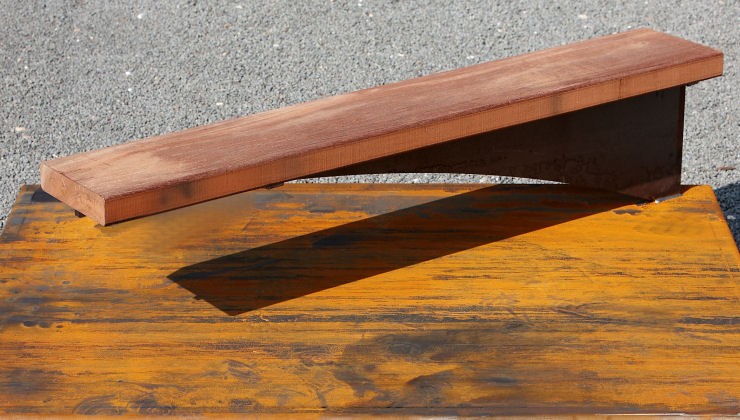
Reusing and transforming the 50-year-old rustic Azobé wood from decommissioned wharfs in Denmark into simple and stylish designer furniture, is the fundamental idea behind all of the furniture from Thors-Design.
An interplay between cool galvanised iron and the wood's original raw, rustic look gives the furniture a modern feel with heart and soul that matches the modern home as well as professional environments.
Thors-Design recycles Azobé wood with the utmost respect for its uniqueness. When making furniture, the manufacturer always consider the way the wood moves and works. So, there are no two identical pieces of wood. All furniture by Thors-Design is custom-made.
AzobĂ© wood is one of the world’s heaviest and most robust types of wood and contains a high level of natural oils. Today the AzobĂ© wood is still strong and durable despite many years of exposure to the natural elements. The furniture has a long life cycle and is virtually indestructible. It can therefore be used indoors as well as outdoors all year around and can be enjoyed for generations.
![]() |
| Thors Eros Bench |
Wednesday, February 27, 2013
Recycle pallets for your outdoors
![]() |
| 01 - great outdoor réalisation by Sophie Savoie de Capsel |
![]() |
| 02 - A simple idea from Pinterest |
![]() |
| 03 - recycle pallets into seatings from vtwonen.nl |
![]() |
| 04 - How to Turn a Pallet into a Garden from 'Life on a balcony' |
Wednesday, January 23, 2013
Lufdesign - Korea
"Lufdesign secures it own design with both fun and practicality simultaneously via observation of the surroundings and wants its pleasure and freedom from design process to be passed onto the users.
The new flow of information is like an air current. By this unilateral or bilateral air current, people can escape from the digitalized information and fulfill the desire to be out of civilization."
Nilfish, Lufdesign’s brand, is developing products through collaboration with rising designers from outside.
Following, some of Lufdesign genial products:
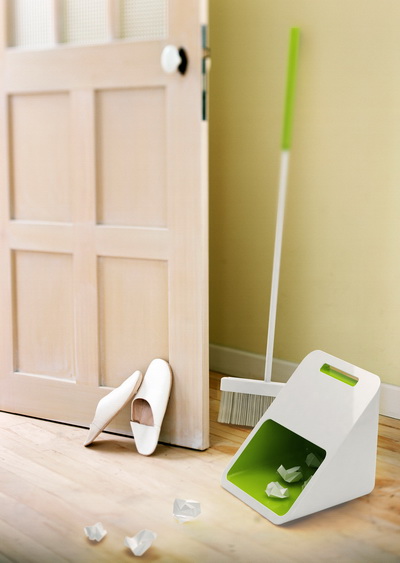
DustPan+Bin
"By morphing the function of the DustPan+Bin with that of the trash-can, a new hybrid is born: this DustPan+Bin that has a function, even when not in use, to put waste as a trashcan.
This DustPan+Bin seem like just DustPan, but it’s not only a DustPan but also trash can. It would be easier to sweep waste and dust. "
FlyingStick
"Just like a toy propeller, we make ‘Flying STICK’ flying by our hands.
We put the ‘Flying STICK’ between the palm of the hand and rub our hands, then ‘Flying STICK’ flies in the sky with the spin.
Most people who see the flying ‘Flying STICK’ want to catch the ‘Flying STICK’. So they probably run and jump to catch it.
‘Flying STICK’ has a camera at the bottom of the body. It can take a picture through being in the sky.
‘Flying STICK’ continuous takes a photograph from beginning to fly to landing in hand.
We discover our pure and natural smile using the ‘Flying STICK’."
"The Fork is a product that takes an everyday USB or mouse cable and transforms the appearance. Picture a messy plate of spaghetti neatly twisted onto a fork placed above a layer of cream sauce right before it is ready to be eaten. The Fork creates a similar picture with any cable.
With each item purchased, 'Save the Children' will be able to provide one meal for a child in hunger."
Leaf Tie
"The artificial cables all around us create a more dark and cold environment. The Leaf tie takes the cables and wraps the cables while bringing life to a dull area. It serves the dual purpose of design and efficiency."
http://lufdesign.blogspot.com
http://www.nilfish.com/
Tuesday, November 27, 2012
Energy Flex House by Henning Larsen Architects
The Energy Flex House was designed by Henning Larsen Architects in collaboration with The Danish Technological Institute and Buro Happold Engineers. The house built in Taastrup - Danmark - is a multiflexible R&D and demonstration building that was presented at the United Nations Climate Change Conference in Copenhagen in 2009.
'The project will provide possibilities for testing energy efficient constructional solutions and components and comprises two test facilities (EFH Lab and EFH Family) and an office- and technical building (EFH Innovation).
EFH Lab is an uninhabited test facility examining the interplay of various floor types, outer walls and technical installations. EFH family is based on the same method of construction but will be occupied by test families. EFH Innovation will contain offices for the employees of the institute and a technical room where visitors can access research and data material from the project.'
Henning Larsen Architects | Vesterbrogade 76 | DK-1620 Copenhagen V
http://www.henninglarsen.com/
Wednesday, November 14, 2012
Molecule project - NYC
Molecule is a new store in the East Village. The owners of Molecule— Alex Venet and Adam Ruhf - had the idea of selling New York City tap water (!) transformed in pure H20. You can go into the store to get a to-go drink, re-fill bottles and jugs.
Molecule’s mission is to change the way we drink and think about water.
"We are a new kind of business for New York City, filling a need for clean and sustainable water. We are hyper-filtering local tap water down to its original and pure form, the H20 molecule, leaving pure, healthy, and tasty water. We encourage customers to Re-Use and Re-Fill containers and end the cycle of waste associated with bottled water. We also provide the opportunity to add vitamins, minerals, and plant-based supplements to our perfectly pure water. "
Address: 259 East 10th Street - New York 10009
![]() |
| neat-0 bike ready for deliveries to the east village |
Subscribe to:
Posts (Atom)


.jpg)
.jpg)